
Appearance, Evidence, and the Making of Monsters
Crimson LakeThis thread follows the novel’s challenge to visual and social shortcuts, from the public’s imagined criminal types to the hidden evidence that exposes both real violence and false certainty.
increasing Bearing strength in each event
 decreasing
Bearing strength in each eventdecreasingA Face Made into Proof
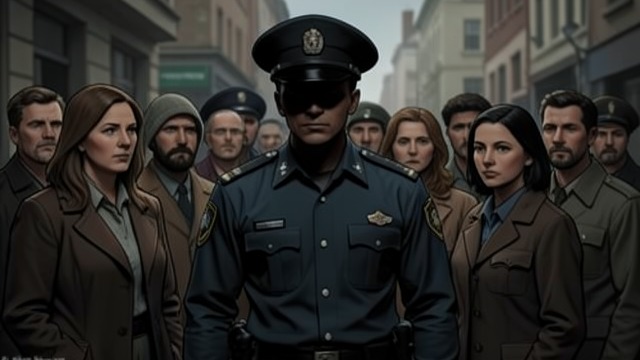
The recognizable suspect
A public image
Ted’s photograph circulates alongside the account of Claire Bingley’s assault. His size, job as a police officer, and presence near the bus stop are absorbed into an image of guilt, even though none alone proves that he attacked her. The public reads his face as if it could settle the question the evidence leaves open.
The expected predator
Ted reflects on the familiar public stereotypes of child sexual offenders and recognizes that he does not resemble them. Instead of reassuring him, that mismatch makes him more disturbing to the public: people decide that a convincing appearance may simply be a better disguise.
Appearance as a trap
The novel does not make physical appearance a reliable test of innocence or guilt. Ted’s normality cannot prove he is innocent, just as the public’s fear cannot prove he is guilty. The story asks readers to distinguish an evidence-based judgment from the comfort of believing that danger always looks a certain way.
The Convicted Investigator
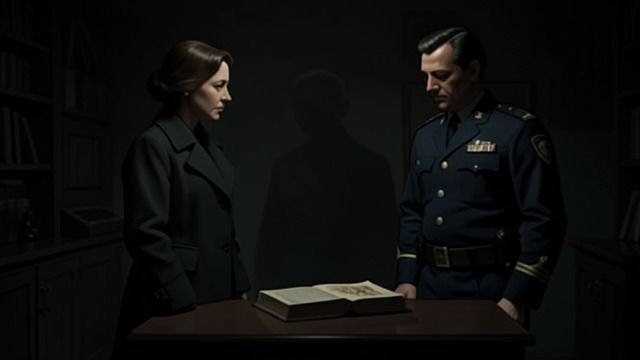
Reputation as a working tool
Two public labels
Amanda Pharrell introduces herself as a convicted murderer, while Ted arrives as a man accused of a similarly devastating crime. Each has learned that the community may treat conviction, accusation, and guilt as interchangeable. Their different legal histories do not spare either of them from being reduced to a headline.
A deliberate performance
Amanda jokes about being dangerous and about the criminal intuition people expect her to possess. Her humour is a way of surviving attention, but it also keeps others uncertain about how much of her behaviour is performance and how much reflects distress. Ted sees a person who functions without being easily understood.
Beyond the label
Amanda offers Ted a place in her investigations despite his public reputation. Their partnership tests the assumption that a person’s most notorious description is the whole truth about them. It does not erase her conviction or Ted’s accusation; it lets each be encountered through conduct as well as reputation.
A Crime Scene Reconsidered
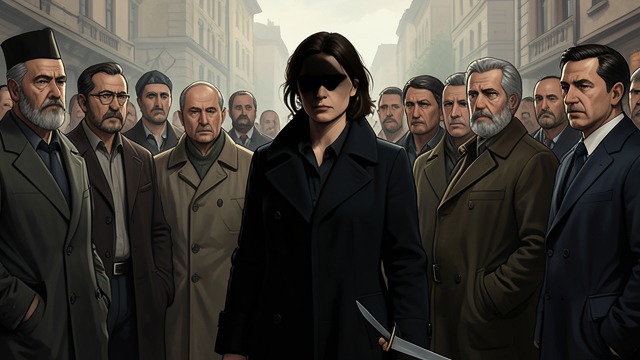
The story that does not fit
The accepted account
The published version of Lauren Freeman’s death presents Amanda as an isolated, frightening teenager who attacked a popular girl without an intelligible cause. Ted notices tensions between that portrait, the physical details in the book, and the circumstances of the two girls’ relationship.
Details resisting the portrait
Amanda’s clothing appears to have been removed before the stabbing rather than soaked in blood and washed by rain. Lauren’s presence with Amanda is also hard to reconcile with the neat contrast between popular victim and social outcast. These observations do not establish what happened, but they expose how much the accepted account depends on a fixed image of each girl.
Listening to the family
Dynah Freeman’s guarded responses and the family’s public memorial version of Lauren complicate the story further. Ted’s questions risk reopening grief, but they also make visible the gap between a beloved public image and the messy private circumstances surrounding a death.
The Stranger in the Bookshop
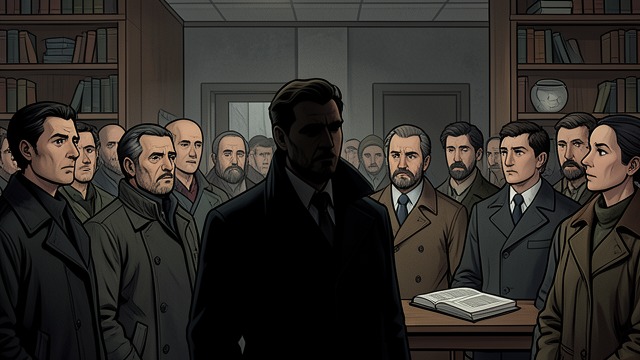
A fan shaped into a suspect
An unsettling figure
The footage shows a man lingering near Jake Scully’s book signing, damaging shelves of books, and later assaulting Patricia Dorrell. His conduct is alarming, but the scene does not show him approaching Jake or establish that he killed him.
Reading motive into movement
Amanda and Ted debate whether the man is an obsessive fan, an angry critic, or someone whose violence has a different cause. The public report gives the figure a threatening outline, while the footage leaves his identity and connection to Jake uncertain. Their investigation must resist turning suspicion into a complete story.
The danger of a convenient culprit
The man’s visible anger makes him an attractive explanation for Jake’s disappearance, especially as his devotion to the author appears extreme. Yet evidence of a separate assault is not proof of murder. The thread shows how a frightening appearance can direct attention while concealing a more deliberate scheme.
The Hidden Criminals
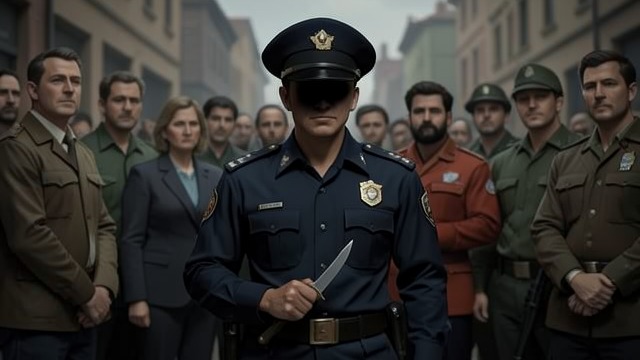
Respectable uniforms, concealed violence
The role of authority
Dynah’s memory reveals that Lou Damford and Steven Hench used their police positions to coerce young girls and take compromising photographs. Their uniforms and institutional authority had helped them appear entitled to obedience, while shielding their conduct from scrutiny.
The misread girl
Amanda, long described as a dangerous outsider, had been subjected to abuse before Lauren’s death. When she seized a knife and fought back, she struck Lauren in the confusion. The revelation does not make the death less tragic, but it changes the moral meaning of the scene and overturns the simple image of a monstrous killer.
What appearances protected
The officers’ public roles made their crimes harder to imagine, while Amanda’s strangeness made her easy to condemn. The novel’s reversal is not that appearance tells a different truth, but that appearance alone never had the authority to tell the truth at all.
During the national coverage and investigation following Claire Bingley’s disappearance
At Ted and Amanda’s first meeting at the Shark Bar
After Ted reads Murder in the Top End and visits Lauren Freeman’s family
During the review of the Cairns Books CCTV footage
In Dynah Freeman’s account of the night at Kissing Point
